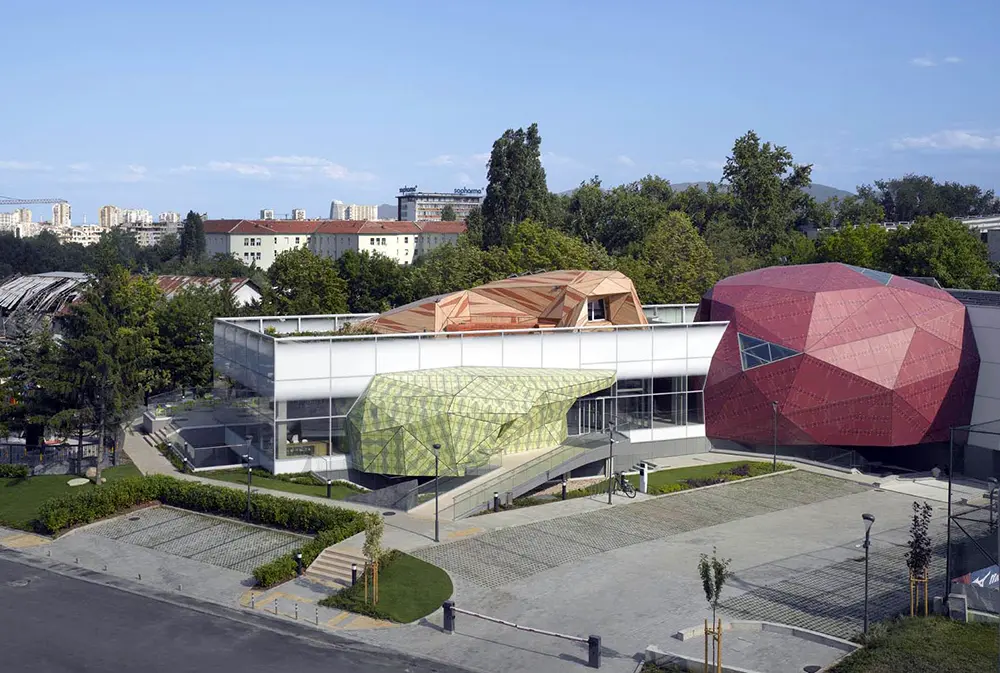
– Muzeiko is the first Children’s Museum in Bulgaria. Located in Sofia, the country’s capital, the amazing architectural environment designed by Lee H. Skolnick Architecture + Design Partnership was named “Building of the Year” in Bulgaria.
POW! principal, Paul Orselli, was pleased to serve as the primary exhibition consultant for the Muzeiko project from start to finish, responsible for helping to form emerging content into completed exhibition areas.
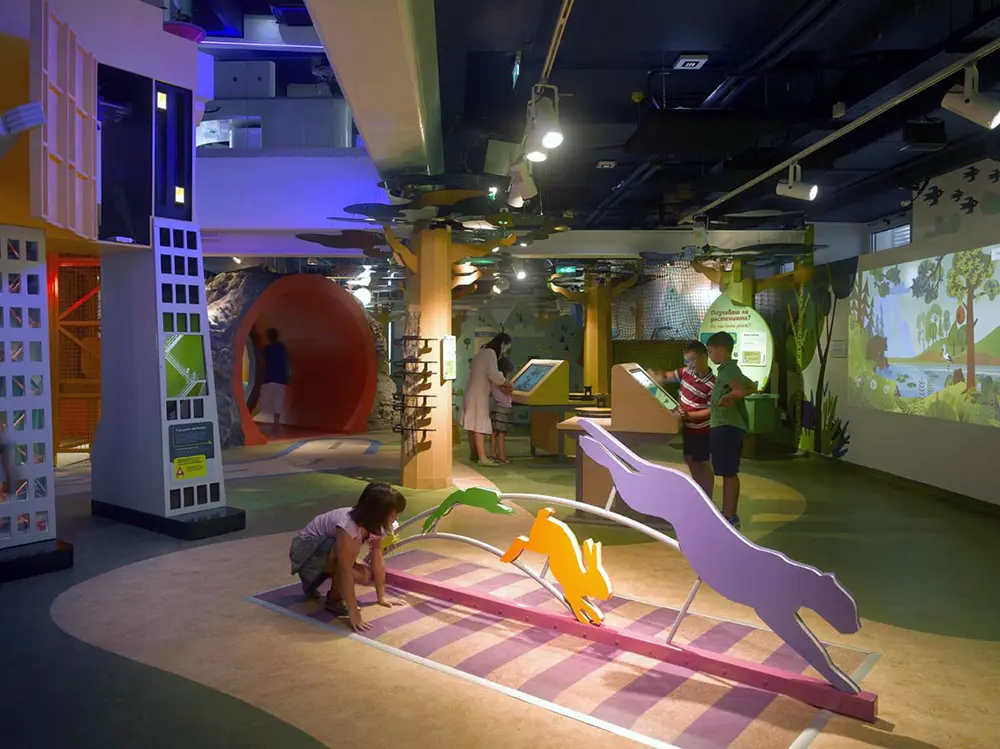
Animal Jump
Visitors match the length of their jumps to those of familiar animals.
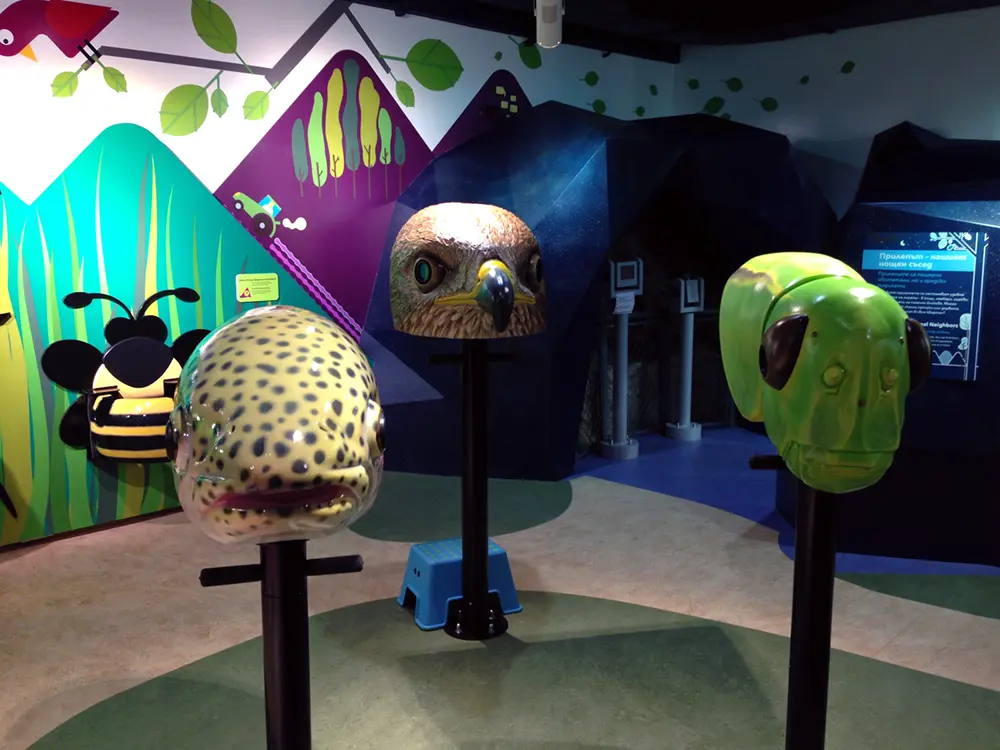
Animal Vision
Find out what it is like to see the world as a fish, a bird, or an insect.
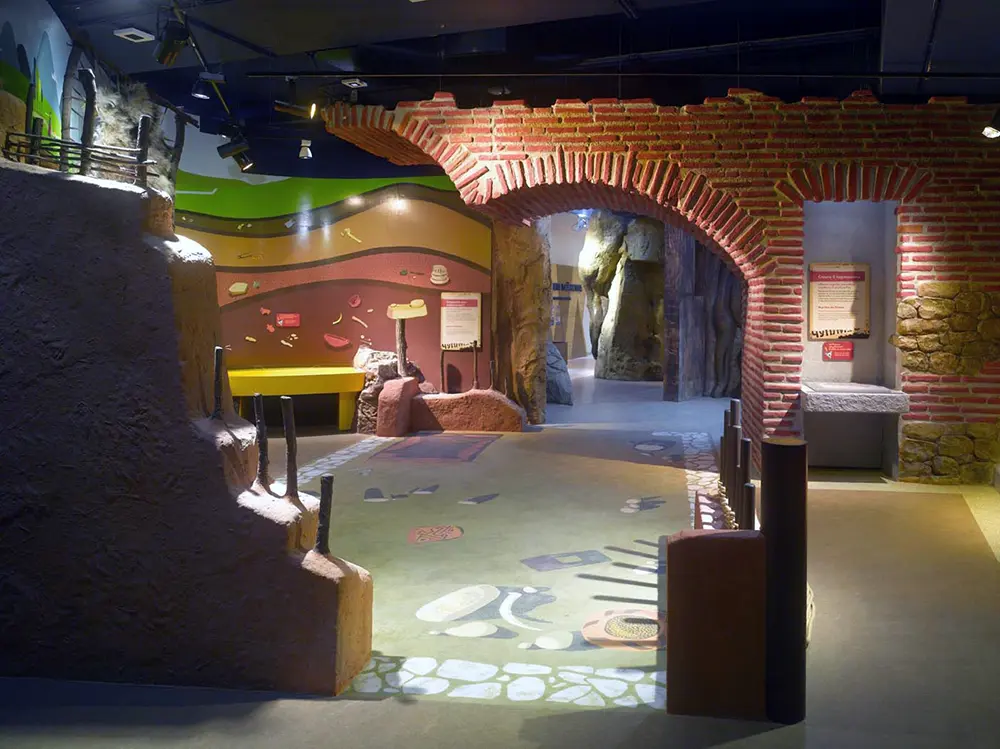
Archaeology
Delve into the Bulgaria’s rich past through simulated dig sites and other interactive exhibits that let you take on the role of an archaeologist.
Muzeiko Building
Muzeiko was designed by Lee H. Skolnick Architecture + Design Partnership and named “Building of the Year” in Bulgaria.
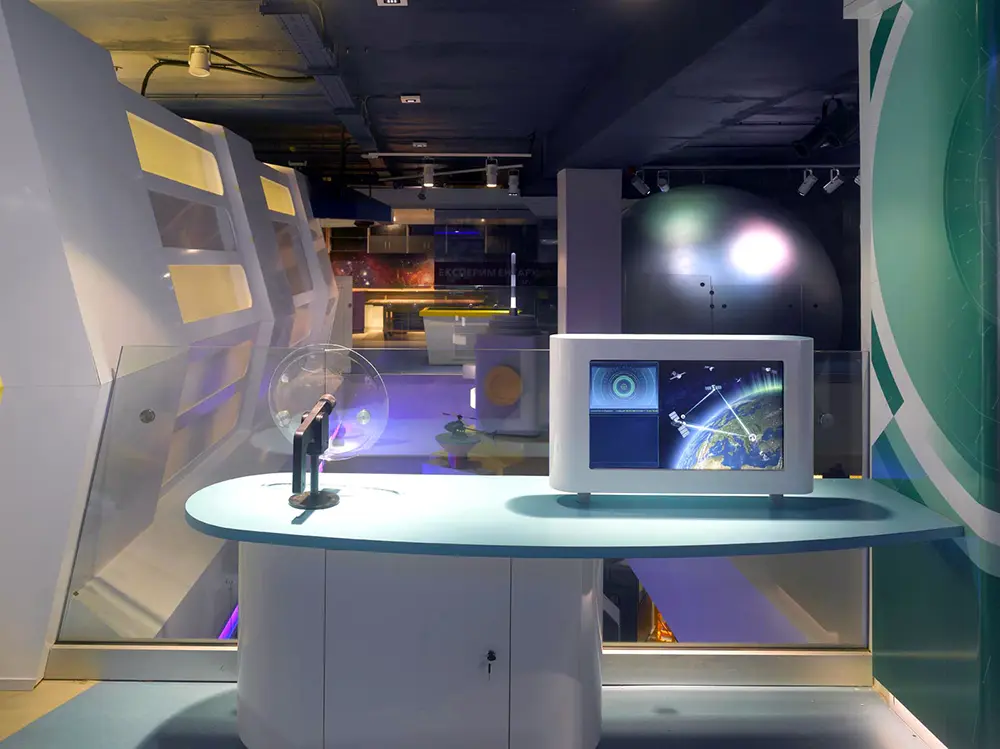
Satellite Station
Young scientists can try to bounce signals off a simulated satellite to create a live video feed of exhibits around Muzeiko.
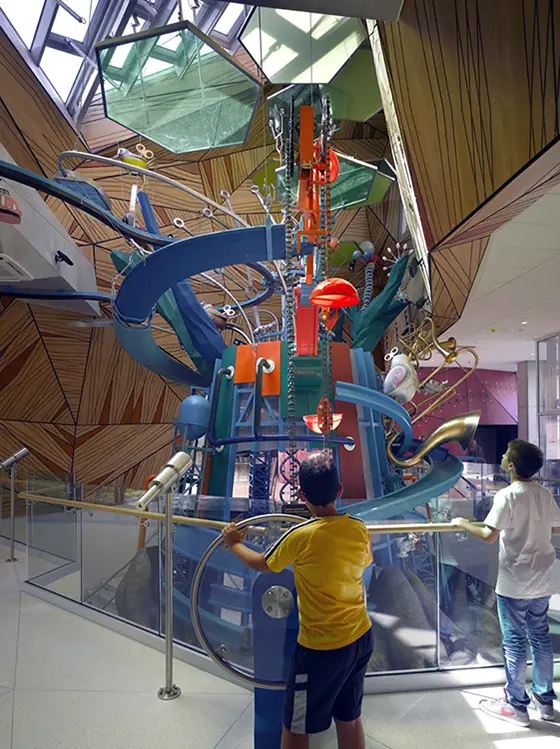
Tree Kids
The central interactive “Tree” in Muzeiko spans all three floors of exhibits.
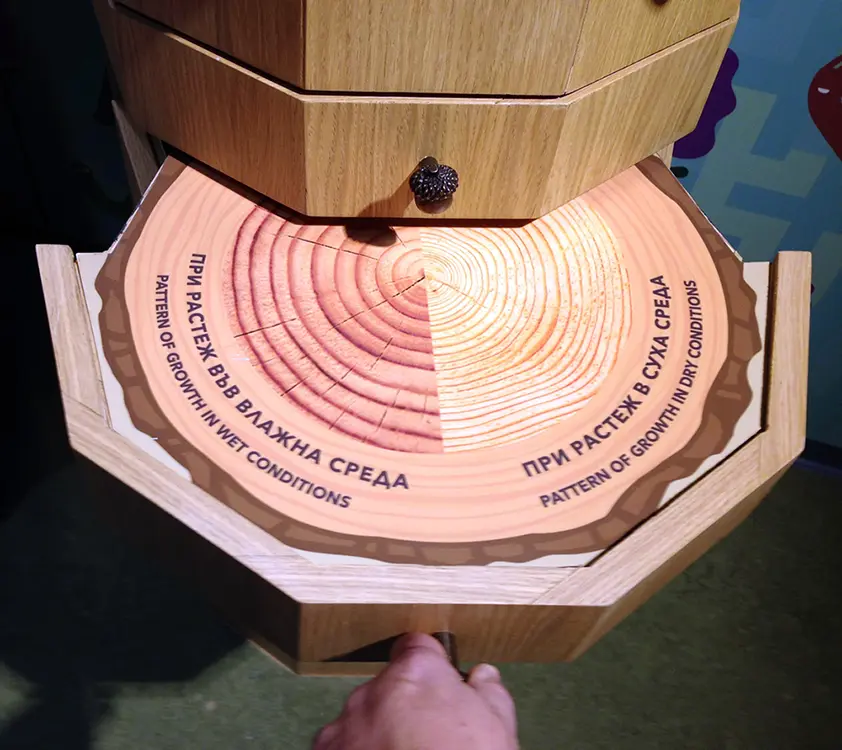
Tree Rings
A nature interactive lets visitors learn more about tree rings.
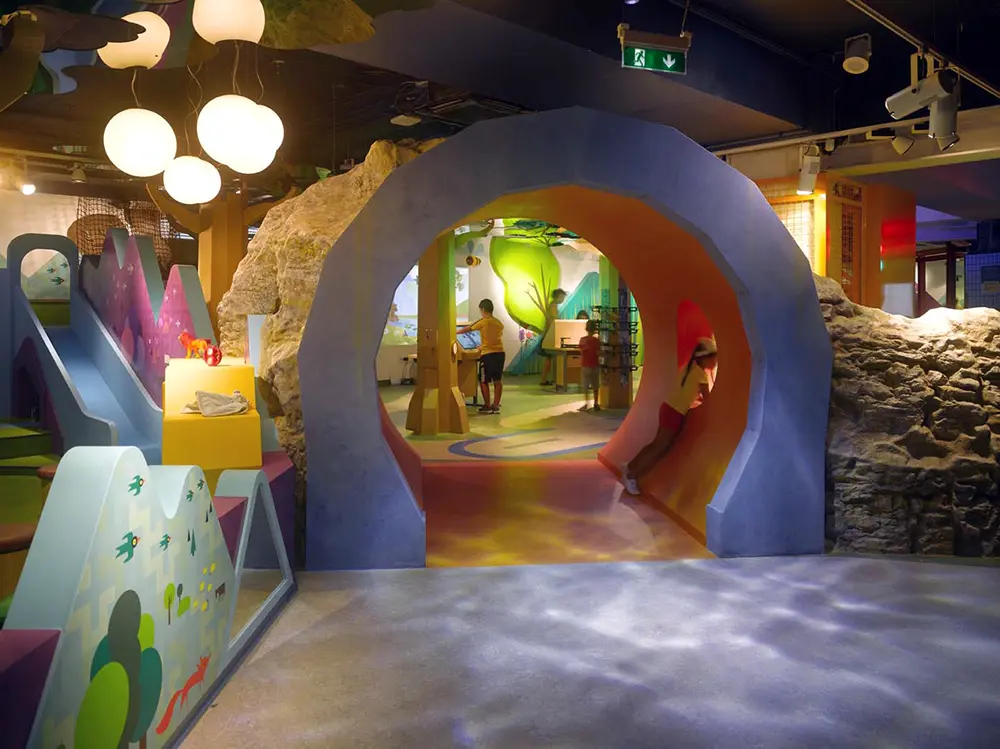
Tunnel
A view into the “Natural World” exhibition area in Muzeiko.
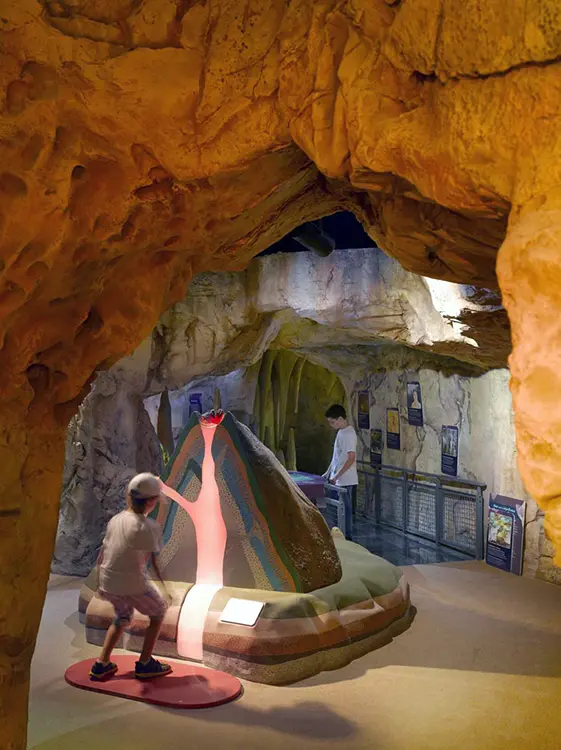
Volcano
Jump to activate a volcano interactive in the Geology section of Muzeiko.
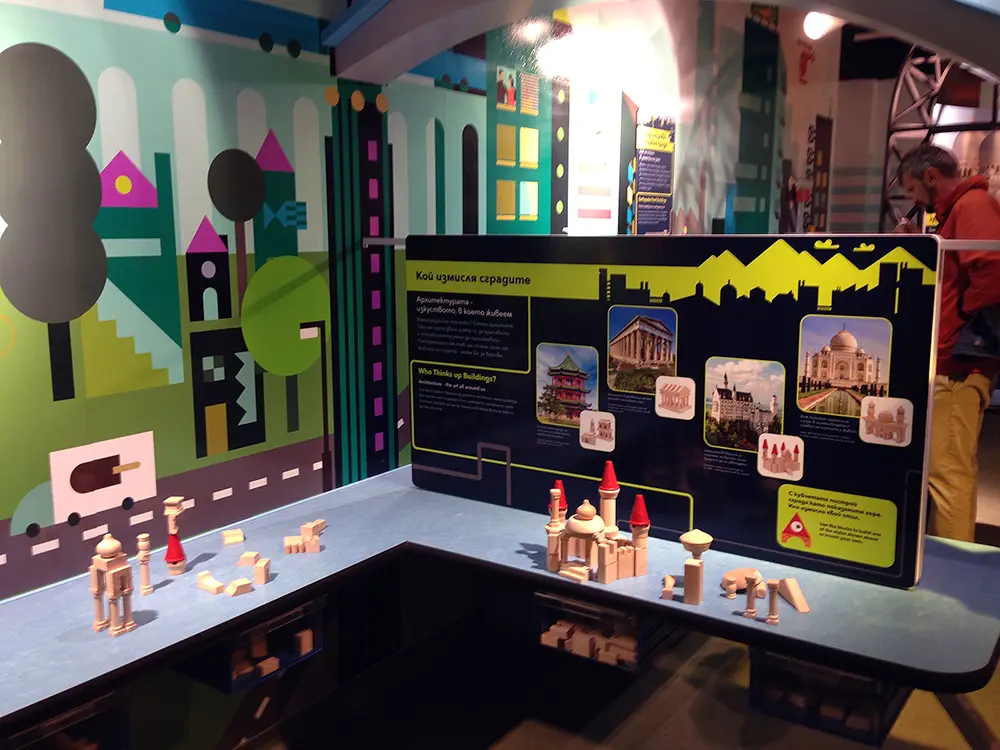
World Architecture Blocks
Visitors can create structures using blocks representing architectural styles from around the world.
POW! (Paul Orselli Workshop) worked with project partners at Baylor University’s Sleep Neuroscience and Cognition Lab and the Mayborn Museum Complex in Waco, Texas, to create the “Sleep Lab” exhibition.
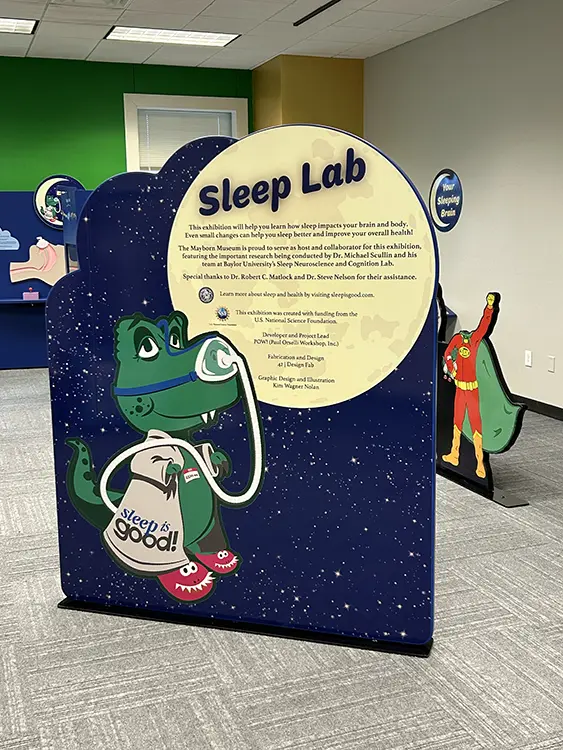
Sleep Lab Intro
The Sleep Lab Intro and Credit panel explains how visitors will “Learn how sleep impacts your brain and body. Even small changes can help you sleep better and improve your overall health!” POW! was delighted to work with creative partners 42 | Design Fab and Kim Wagner Nolan.
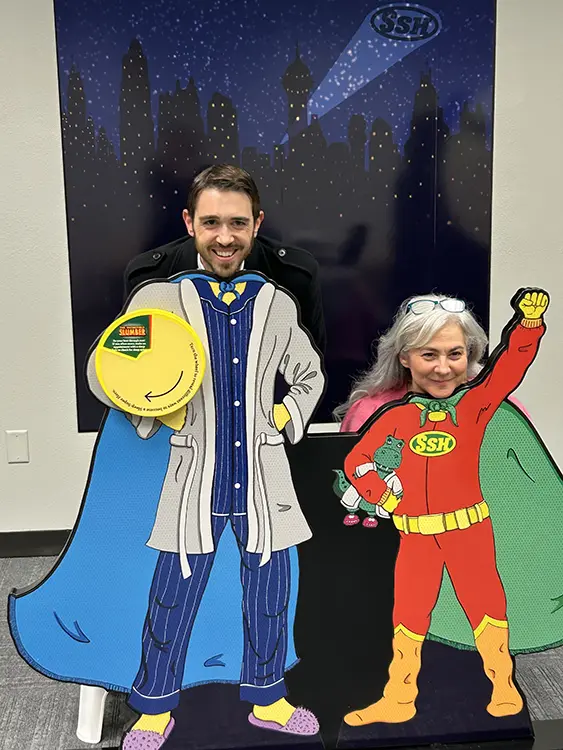
Sleep Super Heroes
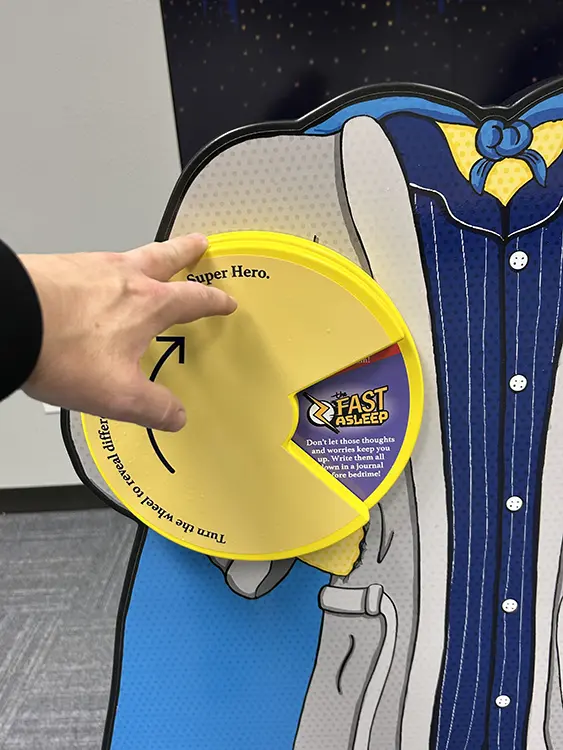
A fun “photo op” for visitors lets them stand behind the cutouts and become “Sleep Super Heroes.”
Sleep Super Heroes Spinner
The graphic spinner allows visitors to read about six specific ways to improve their sleep and become a Sleep Super Hero.
Brain Waves and Explore Your Snore
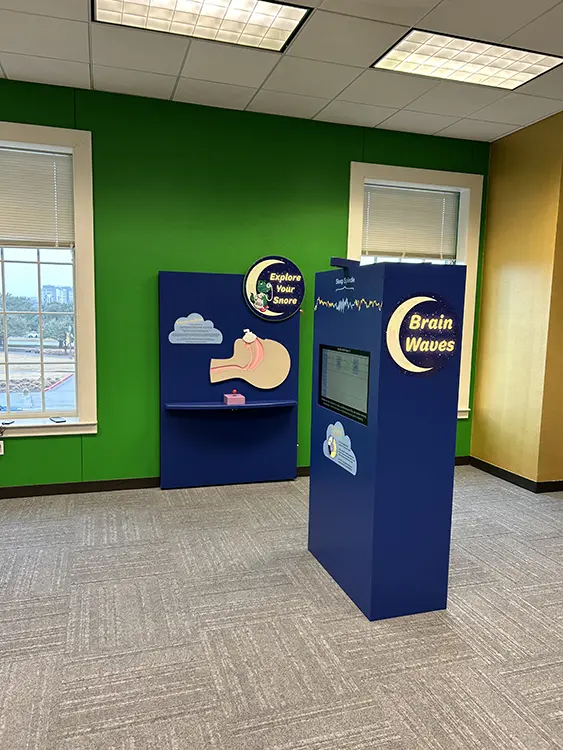
A view into the gallery to see the “Brain Waves” and “Explore Your Snore” components.
Brain Waves
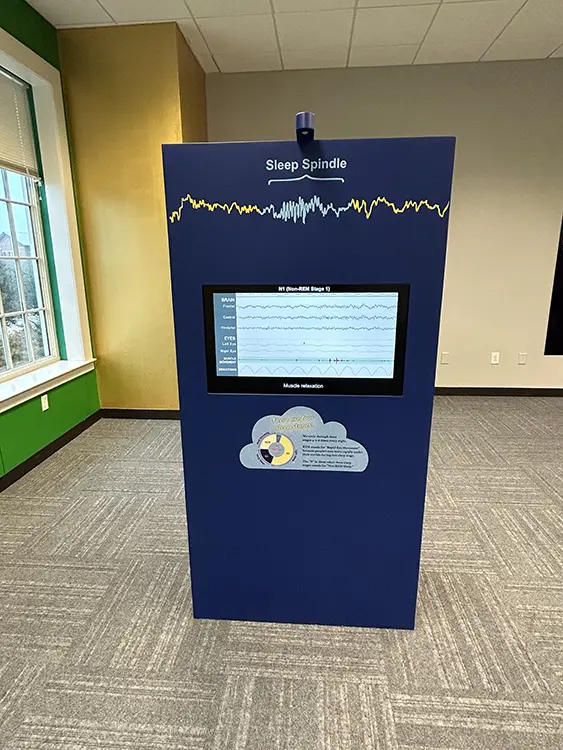
Using actual laboratory data, visitors can view videos to find out how their brain, eyes, and body behave during different sleep phases.
Brain Waves Attract
A short movie showing the attract screen for the “Brain Waves” exhibit with a jumping sheep animation.
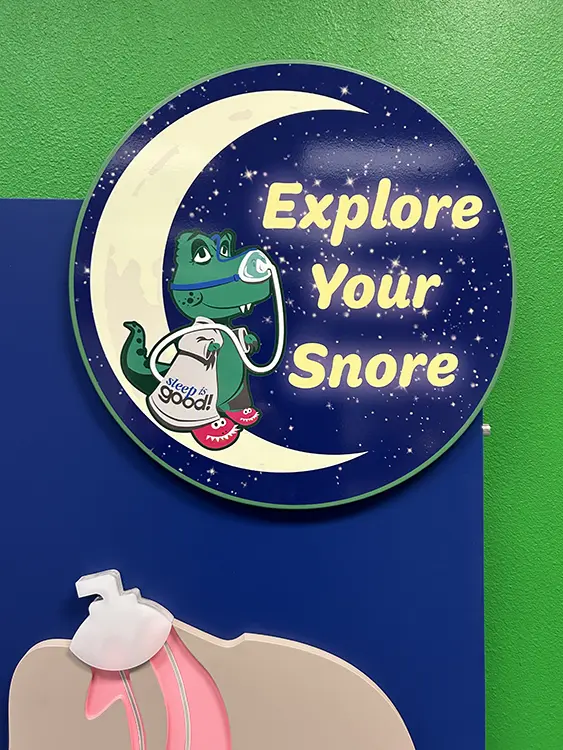
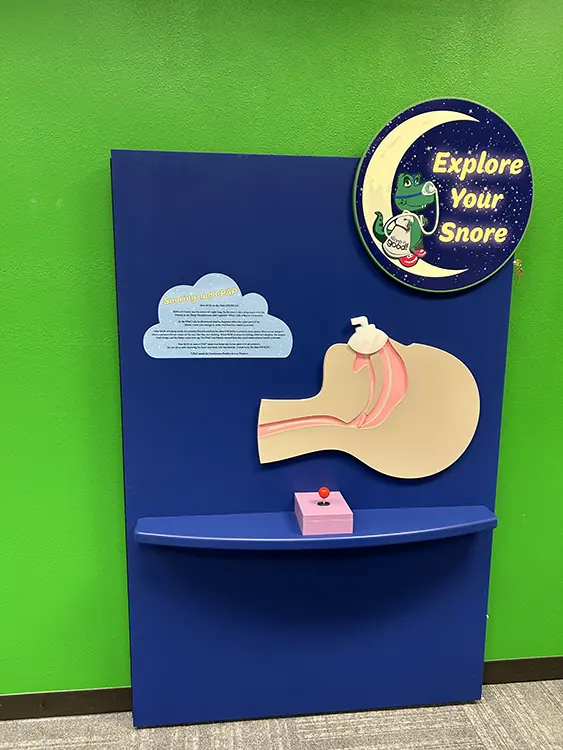
Explore Your Snore Sign
An example of the graphic design from Kim Wagner Nolan for the Sleep Lab exhibition.
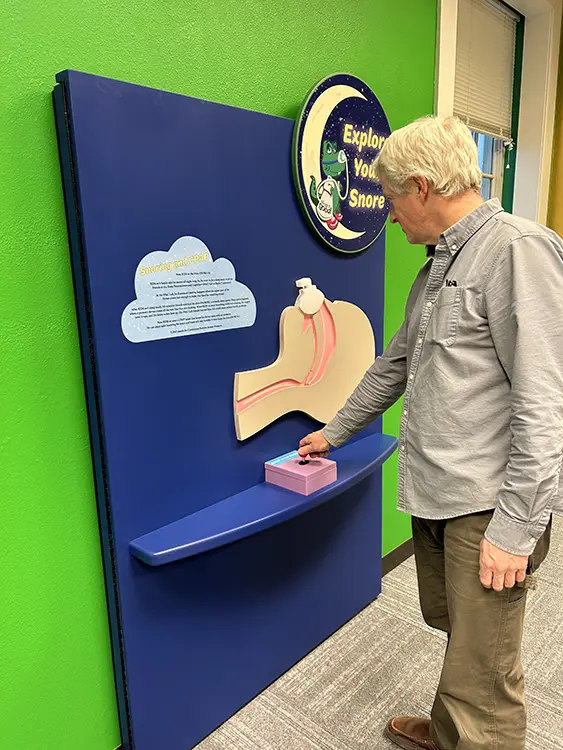
Explore Your Snore
This exhibit gives visitors an opportunity to learn about snoring and how CPAP devices can help people with Sleep Apnea.
Explore Your Snore User
Visitor using the joystick controller can trigger lighting, sound, and motion effects.
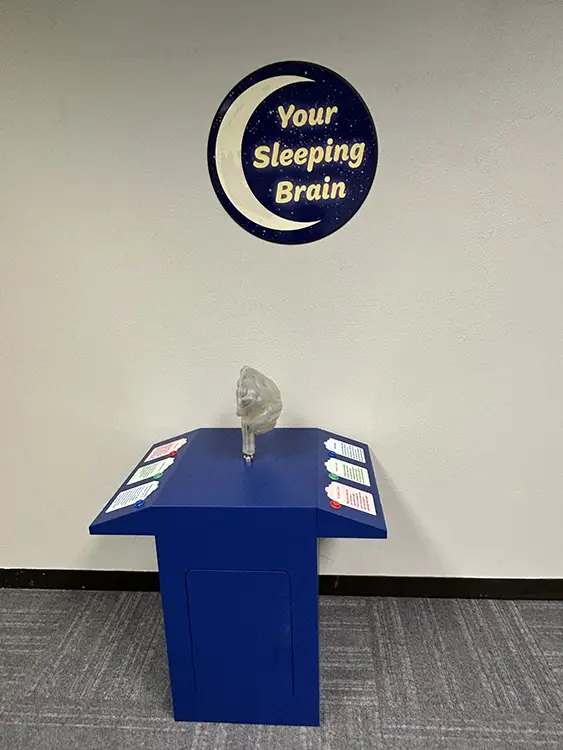
Your Sleeping Brain
A view of the “Your Sleeping Brain” exhibit’s 3D-printed brain model and graphics. This component explains how different parts of the brain behave during sleep.
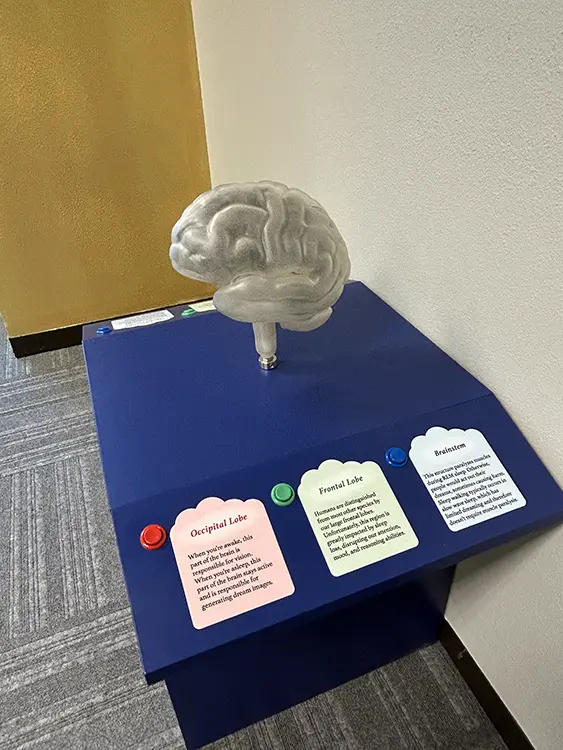
Your Sleeping Brain Close
Closeup view of the “Your Sleeping Brain” exhibit’s 3D-printed brain model and graphic pushbuttons.
Your Sleeping Brain Action
A short movie showing the color-coded lights and graphics as part of the “Your Sleeping Brain” exhibit.
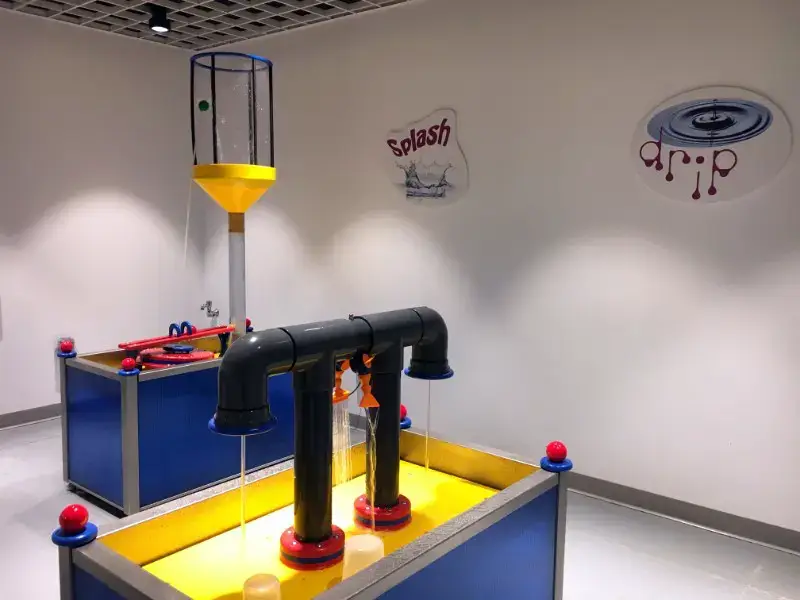
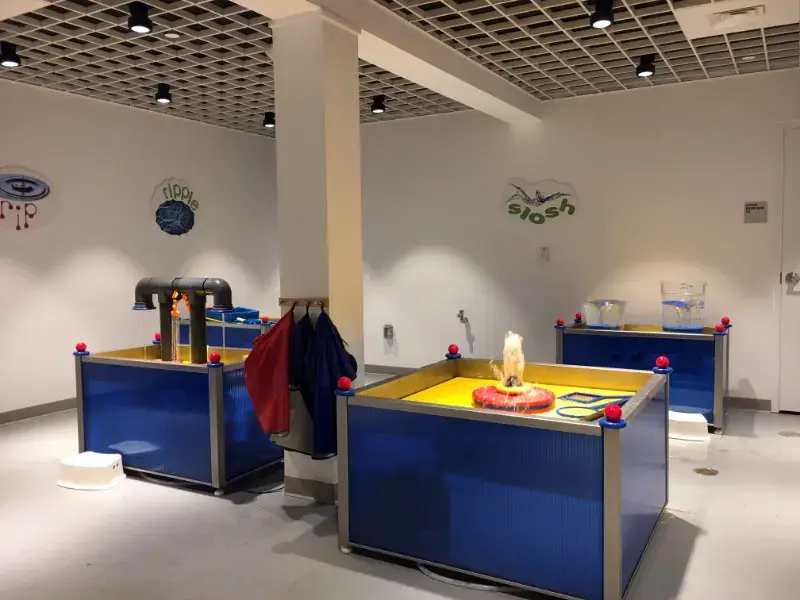
Adults and children alike pour, whirl, float, and get hands wet as they control, move, divert, and explore the properties of water. There’s nothing like the immersive, sensory experience of water to excite and engage!
Vortex Movie
Young scientists touch and experiment these whirling water vortices that are open at the bottom. What happens when you place balls inside?
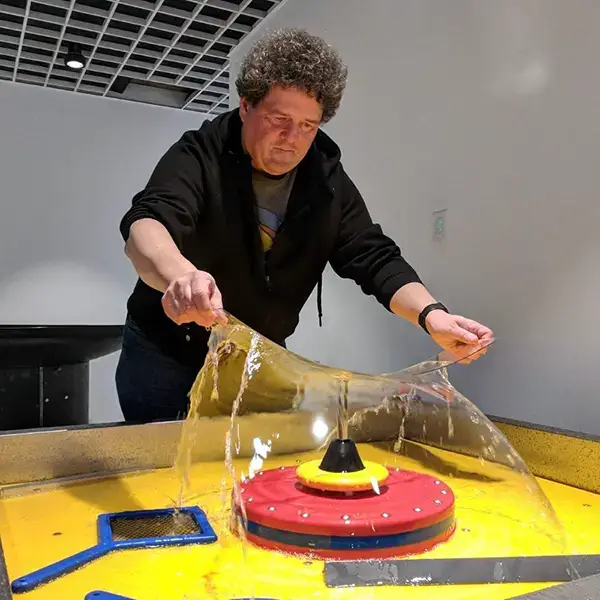
Morph Movie
A laminar stream that jets up 12″ is the testing ground for visitors to create water bells, discs, and other interesting shapes and patterns.
Splash
Another view into the Water Gallery showing the “Laminar Lifter” and the “Pour & Explore” exhibits.
Paul Morph
Paul Orselli experimenting with the Morphable Stream exhibit.
Young scientists and their families can explore and experience the amazing properties of sound by creating, seeing, hearing and feeling waves and physical vibrations!
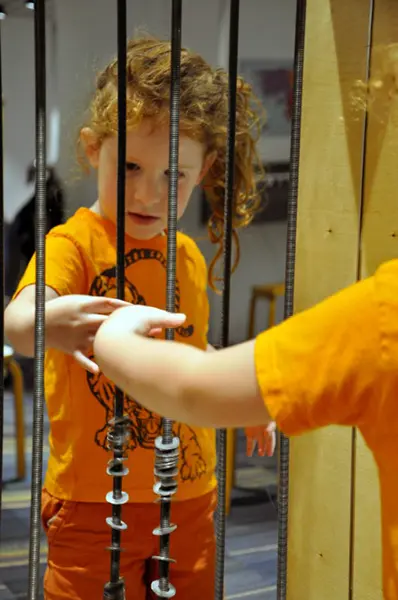
Sound Gallery – Washer Falls
Visitors create jingling, tinkling sounds when they drop metal washers down a variety of threaded rods. (Photo courtesy Kristin Angel)
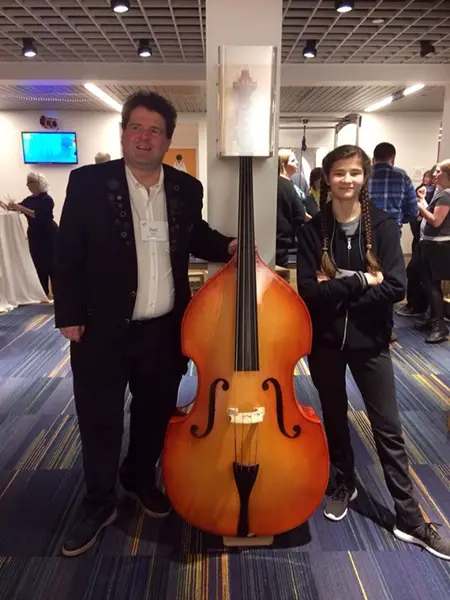
Bass
Kids and adults explore sound and vibrations in a real-life way by playing with a full-sized bass.
This gallery of fun, hands-on activities uses real world, visual interpretations of mathematical concepts to show that math is all around us!
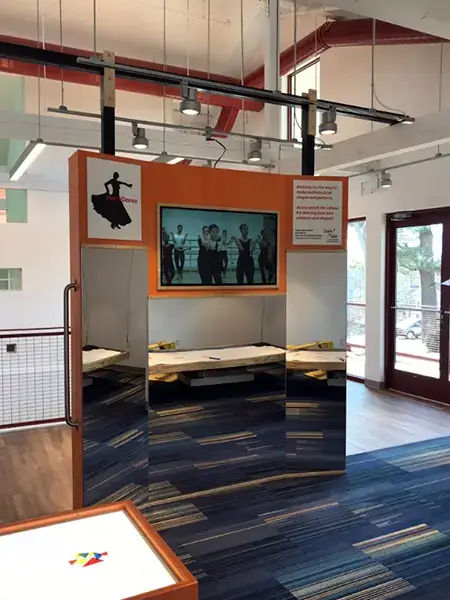
Math Dance
Visitors dance along with Mickela Mallozi, the Emmy® Award-winning host of the PBS show Bare Feet, which explores traditional cultures around the world through dance. Children and adults can move to the music along with Mickela to recreate mathematical patterns and shapes through dance in this one-of-a-kind exhibit.
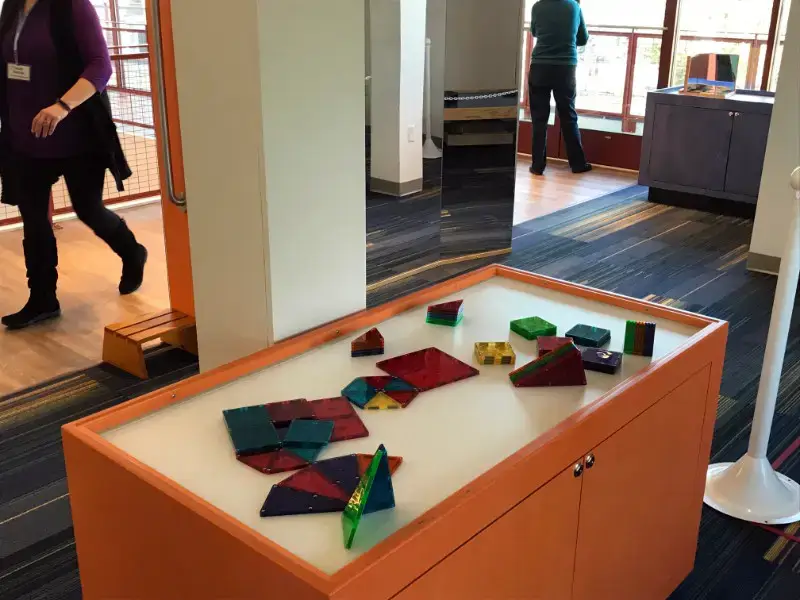
Light Table
Young explorers discover symmetry, angles, and space filling by using colorful Magna-Tile geometric shapes on a glowing light table. These magnetic 2D translucent pieces can create 3D structures that glow.
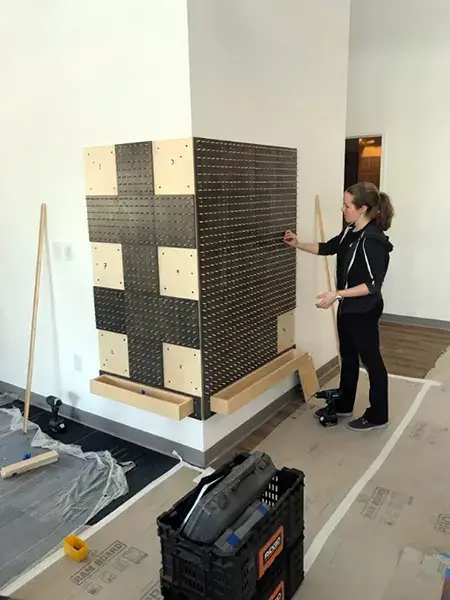
Geoboards Install
Here’s an installation shot (with the 42 Design/Fab crew) of the Geoboards where museum visitors create triangles, squares, curves, patterns, intricate shapes, and even letters when they stretch colored rubber bands on a giant pegboard that wraps around the wall.
Galton
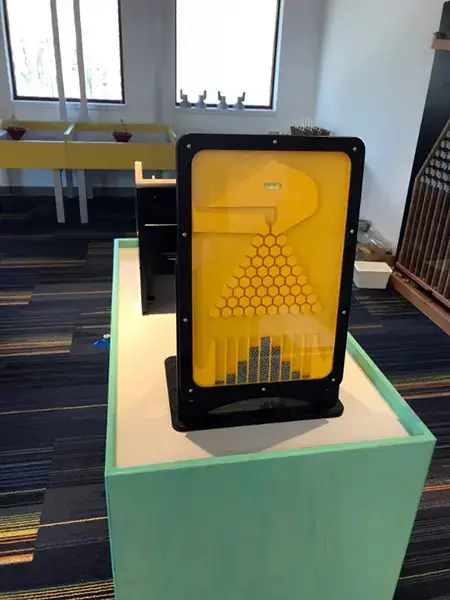
Visitors can experiment with this clever device to find that a similar “bell curve” distribution is generated every time the balls are released, with the majority of the balls in the center of the curve, tapering off to fewer and fewer at each side.
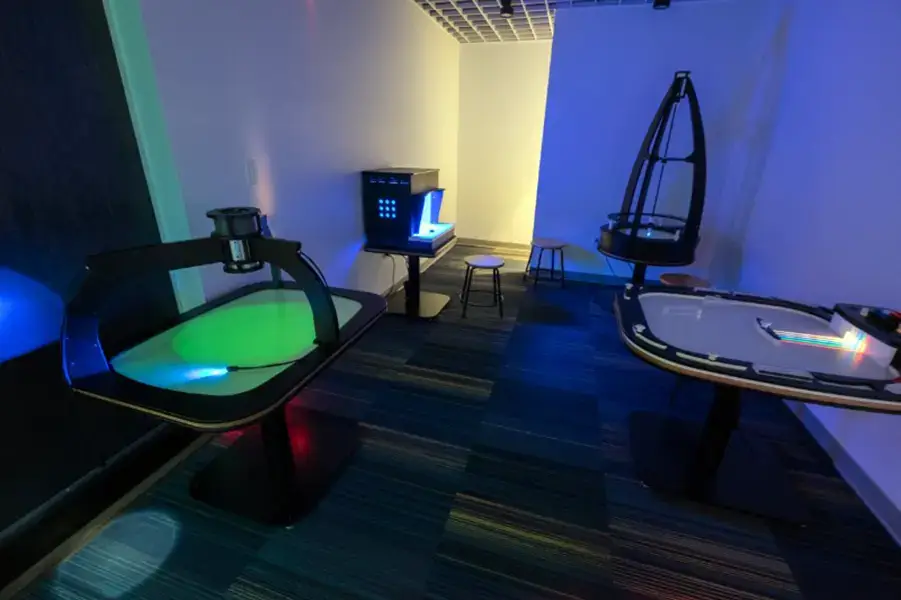
Scientists of all ages can immerse themselves in this vividly engaging exhibit gallery on the properties of light and color. A series of hands-on exhibits in a specially-designed darkened space use LEDs and new materials to create dramatic, high contrast, and aesthetically beautiful light and color.
Light and Color Gallery
A view into the Light & Color gallery. (Photo courtesy MitchellGreenPhotography.com)
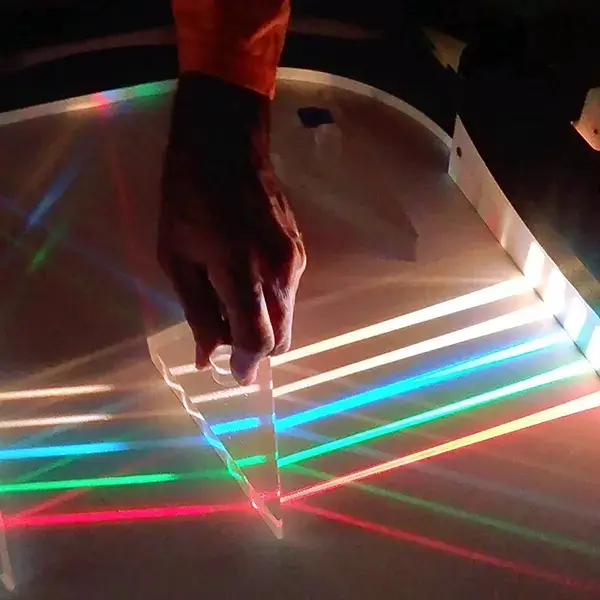
Light Lens
Both children and adults delight in manipulating rays of light with mirrors and lenses to focus, reflect, and mix them to create various effects.
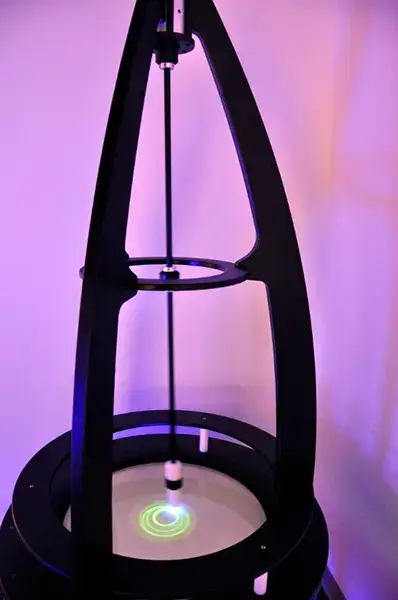
Pendulux
Museum visitors swing a light pendulum suspended over a rotating platter of phosphorescent material to produce a beautiful array of “Spirograph” patterns. Experimenters can change the swing of the pendulum or the speed of the rotating platter and see what happens! (Photo courtesy Kristin Angel)
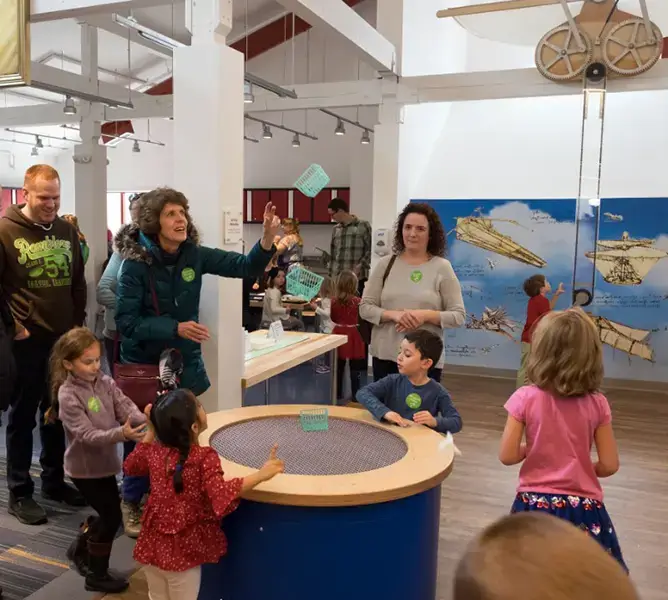
Visitors to the Da Vinci Workshop gallery use tools, tinker, design, build, and invent like the artist, scientist, engineer, and inventor Leonardo Da Vinci. Using recycled materials, off-the-shelf supplies, and tools and technology ranging from scissors and saws to electronic circuits and conductive thread, young scientists design and build diverse creations inspired by the creative thinking and engineering of Da Vinci.
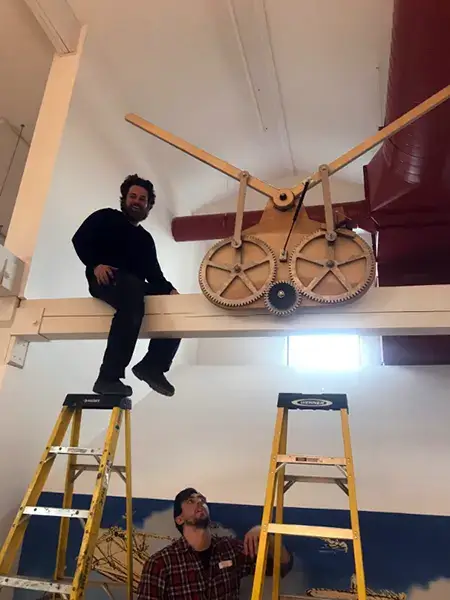
Ornithopter Install
Here’s a view of the crew from DCM Fabrication installing the Ornithopter component.
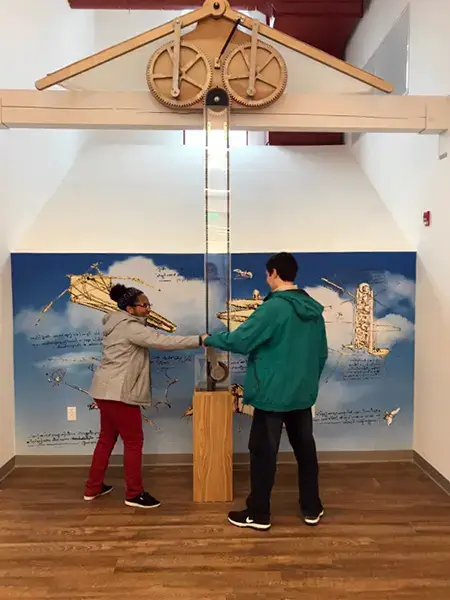
Ornithopter Crank
Children and adults turn the crank to activate the gears that flap the wings of a model flying machine, inspired by the giant Ornithopter that da Vinci designed to test human-powered flight.
Air Flow
Young scientists can experiment with aerodynamic principles and engineering concepts at the vertical airstream. Visitors use a variety of materials to design and test prototypes that fly and hover. (Photo courtesy MitchellGreenPhotography.com)
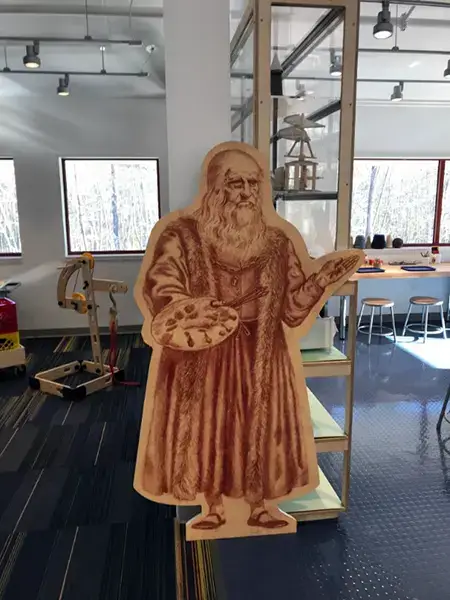
Leo
A life size image of Leonardo himself (created by artist Kim Wagner based on da Vinci’s self portrait) welcomes everyone to the Workshop!
Interior Tables
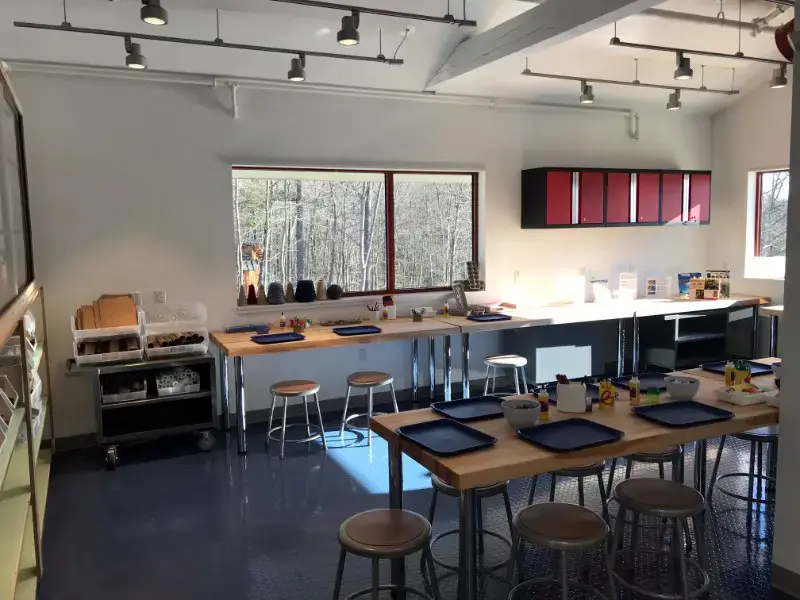
Inspired by da Vinci, visitors use their imaginations and engineering skills to invent new creations and art using recycled materials.
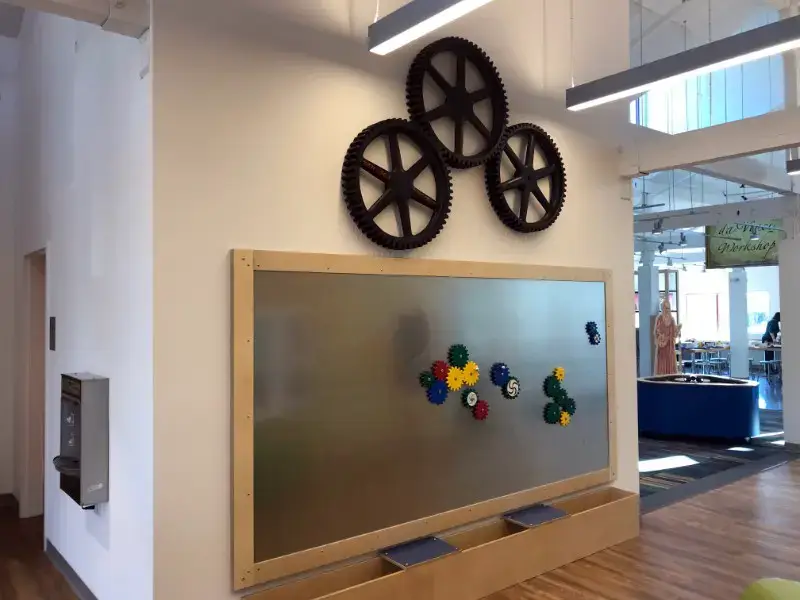
Gear Wall
Young engineers set things into motion with this magnetic wall. Families can create a gear train and watch special gears turn and spin in different directions.
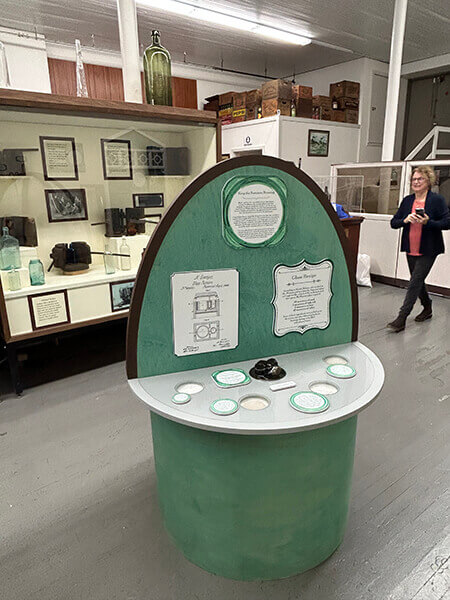
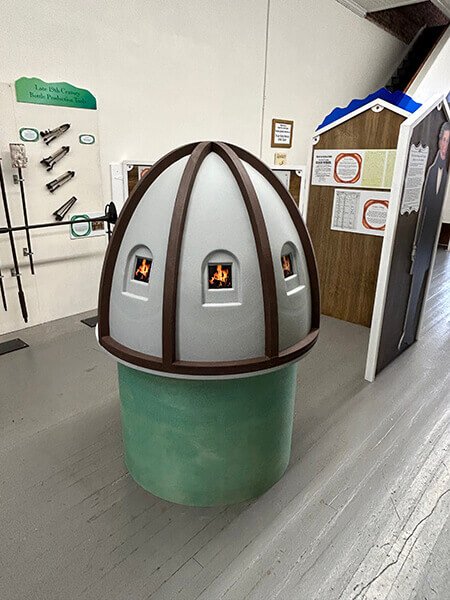
POW! collaborated with DCM Fabrication and Kim Wagner Nolan to create a dynamic new exhibition for the National Bottle Museum. The “Glass Factory Mountain” exhibition shares stories about the people, processes, and products of the historic Glassworks supplying bottles to ship the famous Saratoga Springs waters.
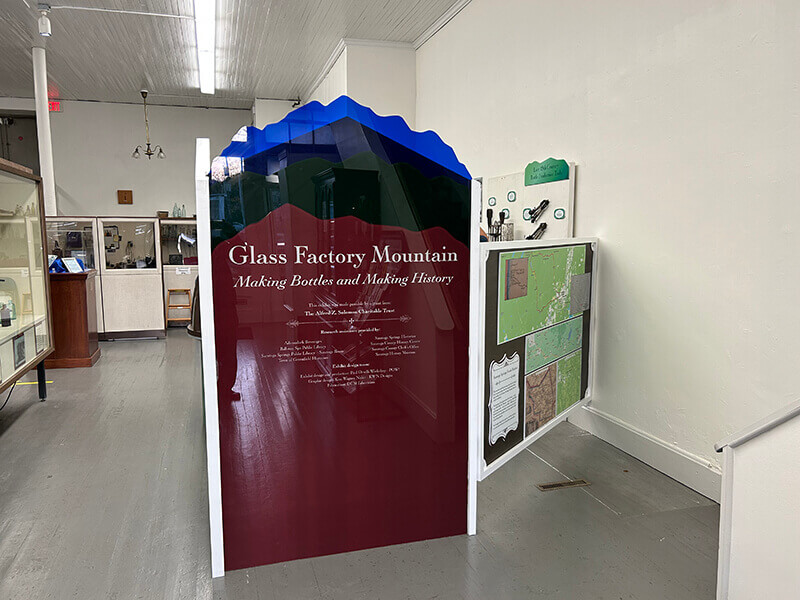
Title & Credit Panel
Layered acrylic panels provide a striking introduction to the “Glass Factory Mountain” exhibition
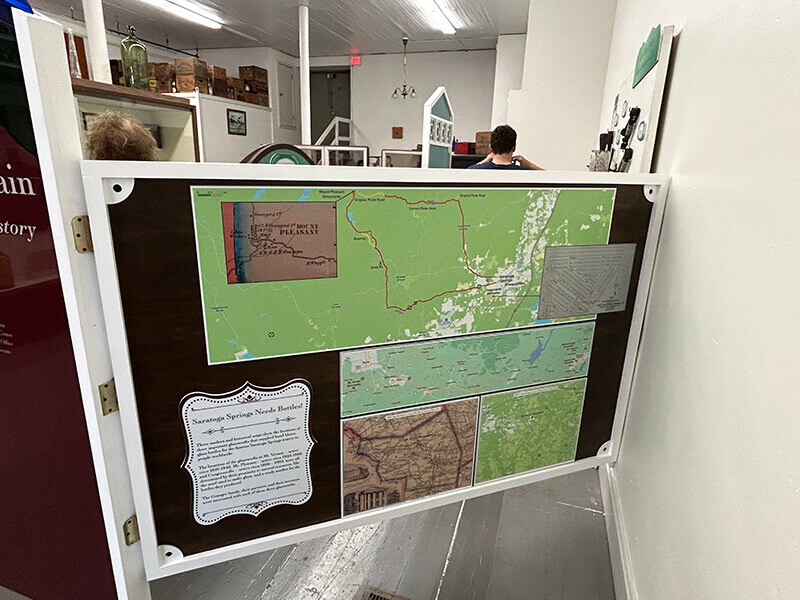
Glassworks Maps
Modern and historic maps help visitors understand how the locations of the Glassworks depended on access to the vast quantities of wood – to fire furnaces and sand – to make glass.
Exhibition Video
Glass Factory Mountain Exhibition Video.
People Section Panels
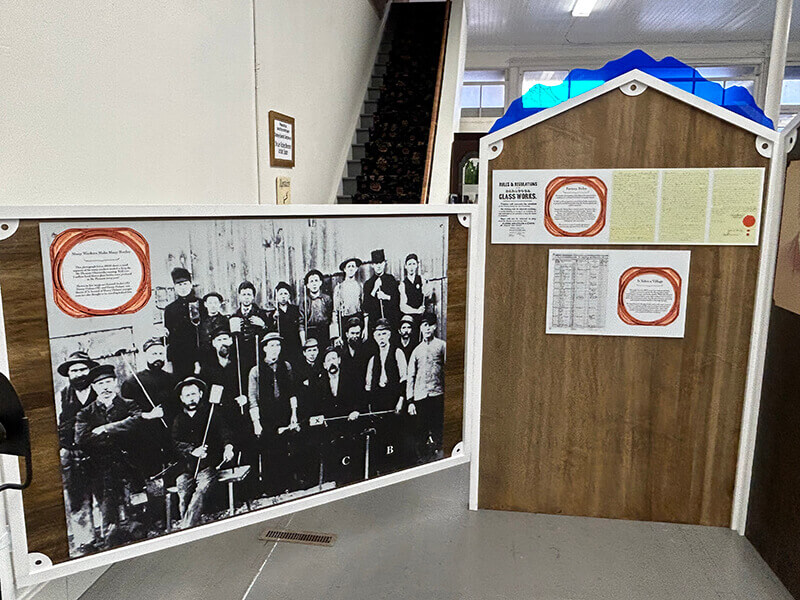
Utilizing 19th-century photographs of glassblowers, Kim Wagner Nolan created large format graphics to punctuate the compelling stories found inside the National Bottle Museum.
Oscar Granger
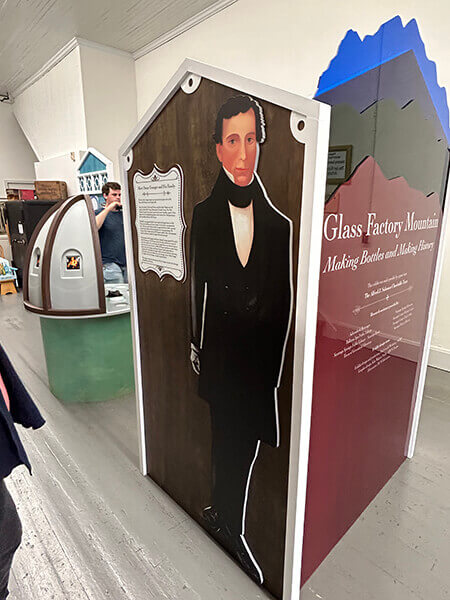
Oscar Granger, one of the key figures of the Glassworks era, is represented by a life-sized graphic based on a historical painting of Granger.
Bottles Display Case
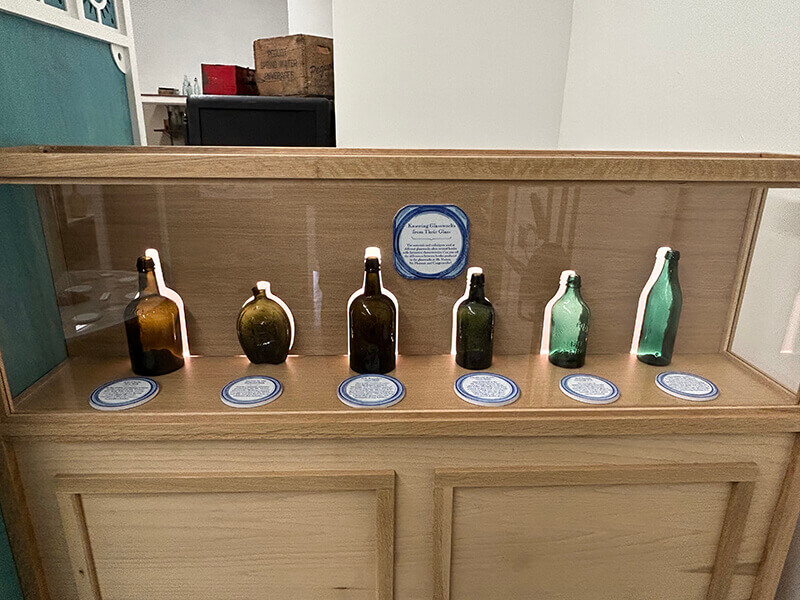
Drawing upon the Museum’s extensive collections, DCM Fabrication built this custom display case with backlighting for each bottle.
Congressville Section Panel
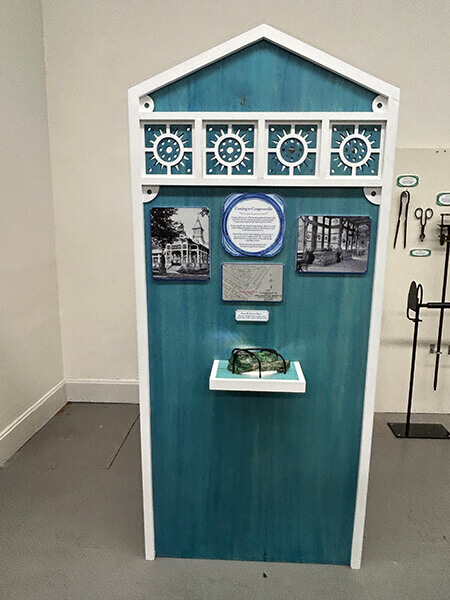
This display panel picks up architectural details shown in the photographs of the pavilion at Congress Spring, where the public would come to sample the waters.
Glass Furnace Model Front
The front of this “Glass Furnace” display features samples of the components needed to make glass and a touchable piece of glass from one of the 19th-century Glassworks.
Glass Furnace Model Back
The back of the “Glass Furnace” display is a scale model of the type of large furnaces that were used to contain the molten glass that glassblowers formed into bottles.